
Learn how to care for your new tattoo, support proper healing, and preserve its details, contrast, and overall quality.
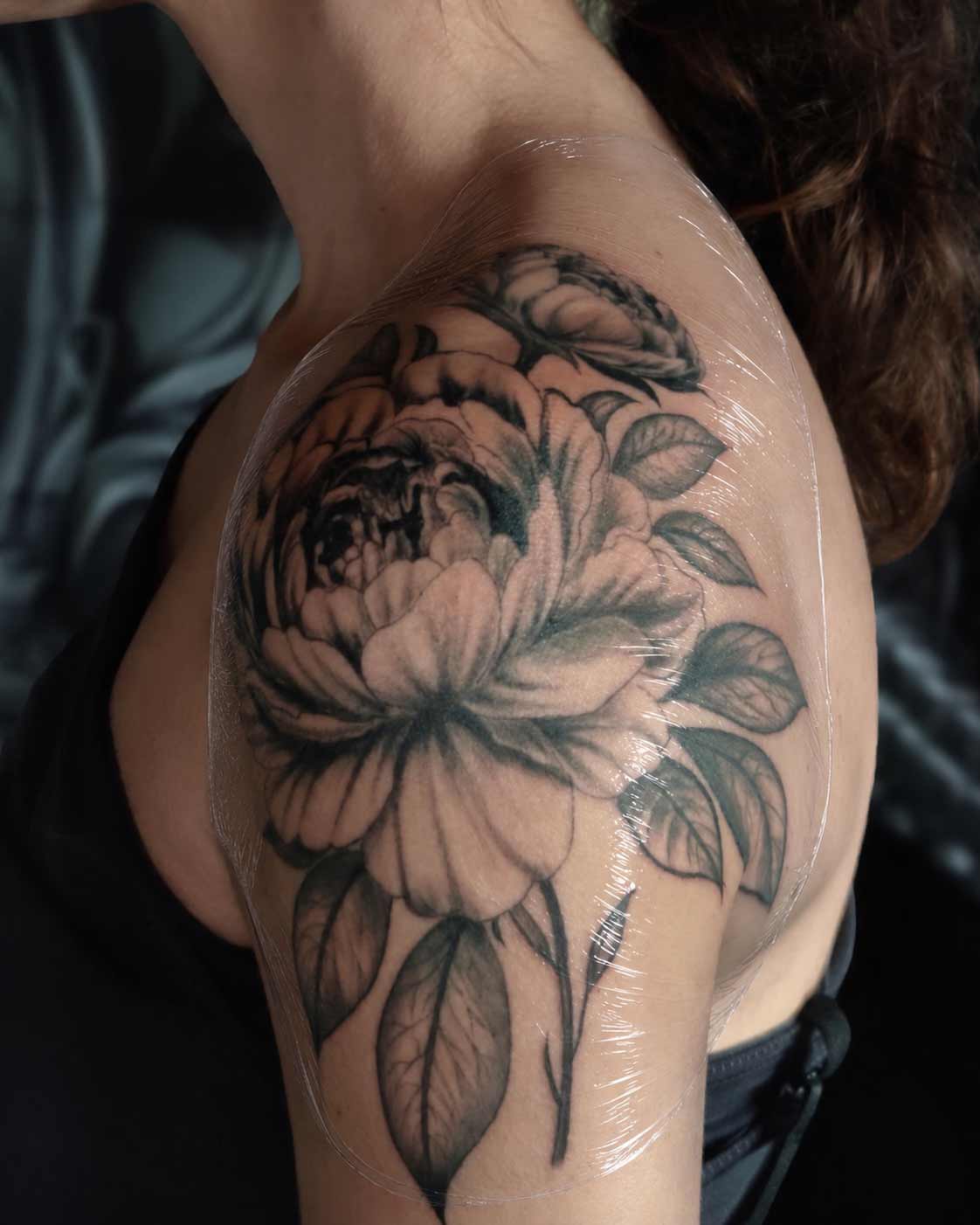
Proper tattoo aftercare plays an essential role in the healing process and the final appearance of your tattoo. During the first days, the skin needs careful protection from dirt, friction, excessive moisture, and direct sunlight. Follow these instructions to support safe healing and preserve the tattoo’s details, contrast, and overall quality.
Keep the protective film on for 1–3–5 days if it remains clean and securely attached.
Remove the film if water, dirt, or excessive fluid gets underneath it.
Wash the tattoo gently with clean hands, lukewarm water, and mild soap.
Allow the tattoo to dry for 20–30 minutes before applying cream.
Continue this regiment until the tattoo is fully under the skin.
Apply only a very thin layer of suitable tattoo aftercare cream.
Avoid scratching, swimming, sauna, intense exercise, and direct sunlight.
Contact your tattoo artist or a doctor if you notice severe pain, pus, unusual heat, or increasing redness.
A fresh tattoo is an open skin injury and requires careful aftercare. Proper healing helps preserve the tattoo’s lines, shading, contrast, and overall appearance. The artist creates the tattoo, but the final result also depends greatly on how responsibly you care for it during the healing period.
If your tattoo is covered with a protective film, fluid may collect underneath it during the first hours or days. This fluid may contain plasma, a small amount of blood, and excess ink. This is usually normal.
Keep the protective film in place for approximately 3–5 days if it remains securely attached and clean. Some types of tattoo film may remain in place for longer, depending on the product and how your skin reacts.
Do not touch, puncture, or remove the film too early.
However, remove it if:
Remove the film slowly and carefully. It is usually easier to remove after a warm shower or under lukewarm running water.
Do not pull the film sharply away from the skin. Stretch it gently along the surface of the skin while removing it.
After removing the film:
Once the tattoo is clean and dry, apply a very thin layer of suitable tattoo aftercare cream. You may use a professional tattoo aftercare product or a suitable cream containing dexpanthenol, such as Bepanthen.
Use only a small amount. The cream should lightly moisturize the skin without leaving a thick, greasy layer.
Too much cream can block airflow, trap moisture, and cause irritation. The tattoo should not feel completely dry, but it should not be covered in excess ointment.
Apply the cream as needed according to the condition of your skin and the instructions given by your tattoo artist.
Always wash your hands before touching the tattoo.
Clean the tattoo gently with lukewarm water and mild, fragrance-free soap. Avoid very hot water, strong soaps, alcohol-based products, and aggressive disinfectants unless specifically recommended.
Do not rub the tattoo with a towel. Pat it dry gently with a clean paper towel and let it air-dry before applying cream.
Do not scratch the tattoo, even if it becomes itchy.
Do not pick, peel, or remove scabs and dry skin. Allow them to fall away naturally. Removing them too early can damage the skin, remove pigment, and increase the risk of scarring.
During the healing period, avoid:
Avoid swimming, sauna, and long baths for approximately two weeks or until the surface has healed properly.
Wear clean, loose-fitting clothes that do not rub against the tattoo. Tight clothing can irritate the skin, trap moisture, and damage healing areas.
Change clothing and bed linen regularly, especially during the first days. Keep pets away from the fresh tattoo and avoid touching it unnecessarily.
Do not cover the tattoo with ordinary plastic wrap unless your tattoo artist specifically instructs you to do so.
Avoid intense exercise and gym training during the early healing period, especially when the tattoo is located near joints or areas affected by movement.
Sweat, stretching, friction, and contact with gym equipment may irritate the tattoo and increase the risk of contamination.
Light movement may be acceptable if it does not cause pain, rubbing, or excessive sweating.
Keep the healing tattoo away from direct sunlight. A fresh tattoo is especially sensitive to ultraviolet radiation.
Do not apply sunscreen to an open or actively healing tattoo unless the product is suitable and your tattoo artist recommends it.
After the tattoo has completely healed, use a high-SPF sunscreen to protect the colours, details, and contrast from fading.
During normal healing, you may experience:
These symptoms should gradually improve.
Small tattoos often heal on the surface within one or two weeks. Larger or heavily shaded tattoos may require more time. Complete recovery of the deeper layers of skin can take several weeks.
Contact your tattoo artist or a healthcare professional if you notice:
These symptoms may indicate an infection or another problem that requires professional assessment.
Follow the aftercare instructions consistently and give your skin enough time to recover. Keep the tattoo clean, apply only a small amount of cream, and avoid unnecessary touching, moisture, friction, and sunlight.
Proper aftercare helps your tattoo heal cleanly and preserves its details, contrast, and overall quality for years to come.